
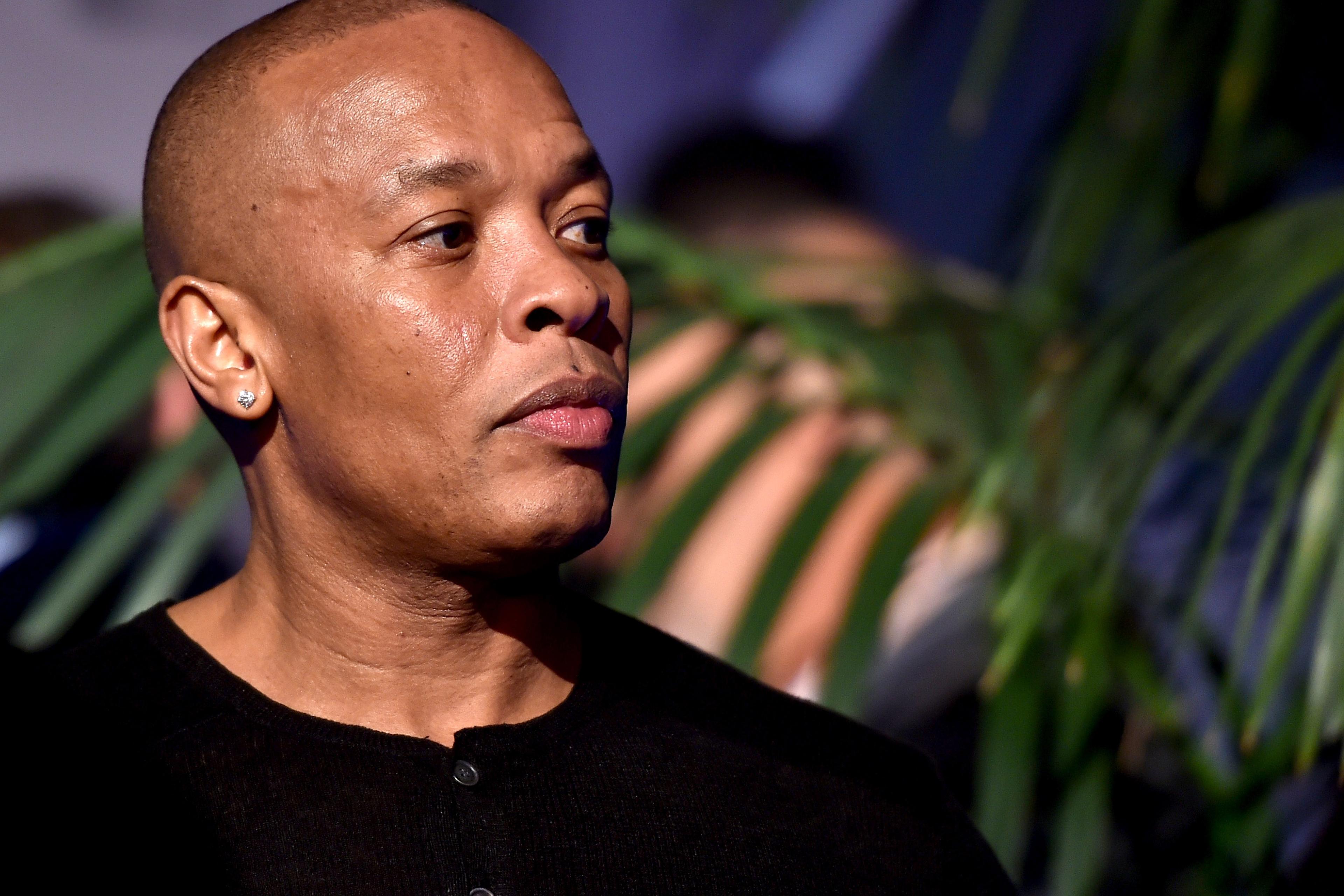
Few people in music history have changed hip-hop as profoundly as Dr. Dre.
While many legendary artists are remembered for classic songs or successful albums, Dr. Dre's influence reaches much further. As a producer, rapper, entrepreneur, executive and talent developer, he has repeatedly changed the direction of hip-hop.
He helped define the sound of West Coast rap, introduced generations of future superstars, established one of the genre's most important record labels and transformed studio-quality audio into a global consumer brand.
More than three decades after becoming one of rap's defining figures, Dr. Dre remains one of the most respected names in music. His production methods, catalog, business decisions and approach to artist development continue influencing artists, producers and engineers around the world.
His legacy is not simply that he made successful records.
Dr. Dre changed how hip-hop sounds, how artists are developed and how creative influence can become long-term business power.
Key Takeaways
- Dr. Dre helped establish the polished, bass-heavy production associated with modern West Coast hip-hop.
- The Chronic brought G-funk into the mainstream and introduced Snoop Dogg to a national audience.
- 2001 proved Dre could update his sound without abandoning the musical precision that defined his earlier work.
- Aftermath Entertainment became a major artist-development platform for Eminem, 50 Cent, Kendrick Lamar and Anderson .Paak.
- Dr. Dre's production emphasizes vocal performance, arrangement, engineering and complete song construction rather than beat-making alone.
- Beats Electronics demonstrated that a hip-hop producer could build a global consumer-technology brand.
- The Super Bowl LVI halftime performance marked a major public celebration of West Coast hip-hop's mainstream cultural influence.
Before Dr. Dre, West Coast Hip-Hop Sounded Different
West Coast rap was already developing into a powerful regional movement during the 1980s, but Dr. Dre helped push its production into entirely new territory.
His early work with the World Class Wreckin' Cru gave him experience with electronic music, drum machines, synthesizers and club-oriented arrangements.
That background became important when he began working with N.W.A.
The group's music required production capable of supporting aggressive lyrics without becoming chaotic. Dre responded with harder drums, deep bass, carefully selected samples and arrangements that gave each rapper room to command attention.
His mixes sounded forceful but organized.
Vocals remained clear. Drums carried weight. Samples supported the writing rather than overwhelming it.
This attention to sonic balance helped distinguish N.W.A from other groups emerging during the same period.
N.W.A Helped Establish a New West Coast Sound
Dr. Dre's production for N.W.A helped introduce a darker, more confrontational version of Los Angeles rap to audiences around the world.
The group's records combined direct street reporting with production that felt cinematic, disciplined and physically powerful.
Dre understood that controversial writing required equally memorable sound.
Heavy drum programming, funk samples and carefully arranged vocal sections gave the music structure while preserving its intensity.
N.W.A's success helped prove that West Coast artists could compete nationally without imitating the dominant New York sound.
Regional identity became a strength rather than a limitation.
Dr. Dre helped turn production from background accompaniment into one of the central characters in West Coast hip-hop.
Production Became the Centerpiece
One of Dr. Dre's most important contributions was his treatment of production as more than a beat beneath a rapper.
He approached songs as complete recordings.
That meant considering:
- Drum selection
- Bass movement
- Sample placement
- Live instrumentation
- Vocal tone
- Ad-libs
- Song structure
- Transitions
- Mix balance
- Emotional pacing
A Dr. Dre production often feels spacious even when several musical elements are present.
Each sound has a defined purpose and location.
This disciplined approach helped establish production quality as a major competitive advantage within hip-hop.
The Chronic Changed Everything
When The Chronic arrived in December 1992, it immediately changed expectations for West Coast rap production.
The album drew heavily from Parliament-Funkadelic, soul and funk while presenting those influences through polished drums, deep bass lines, melodic synthesizers and layered vocal arrangements.
The resulting sound became widely known as G-funk.
Records including “Nuthin' but a 'G' Thang,” “Let Me Ride” and “Dre Day” combined street narratives with production that felt smooth, musical and accessible without losing intensity.
The Chronic did not invent every element associated with G-funk, but it brought the style to a massive audience and established a new commercial standard for West Coast hip-hop.
G-Funk Expanded Hip-Hop's Emotional Range
G-funk changed more than instrumentation.
It expanded the emotional possibilities of rap production.
A record could sound relaxed and threatening at the same time.
Melodic synthesizers and live-feeling bass created warmth, while hard drums and aggressive vocals preserved street intensity.
The production could support party records, narratives, battle songs and social commentary without becoming musically repetitive.
This balance gave West Coast hip-hop a globally recognizable sound.
Producers outside California soon began borrowing elements of the style, and its influence remains present in modern rap, R&B and West Coast revival records.
Snoop Dogg Became Dre's First Major Solo Breakthrough
The Chronic also introduced Snoop Dogg to a much wider audience.
Dre recognized that Snoop's relaxed delivery created a compelling contrast with the production.
Instead of forcing him to rap with more aggression, Dre built arrangements that allowed Snoop's timing, tone and personality to become strengths.
This became one of the clearest examples of Dr. Dre's talent-development philosophy.
He did not simply give artists beats.
He identified what made each performer distinctive and built records around those characteristics.
Doggystyle Confirmed the Formula
Dr. Dre's work on Snoop Dogg's 1993 debut album, Doggystyle, extended the G-funk era and proved that the sound could support another major artist's identity.
The album maintained Dre's polished production while allowing Snoop's humor, storytelling and conversational delivery to remain at the center.
Its success demonstrated that artist development required more than attaching a new rapper to a successful production style.
The artist needed a complete world: voice, collaborators, artwork, subject matter, videos and musical direction.
Dre's work with Snoop helped establish that model.
Perfection Became the Standard
Artists who have worked with Dr. Dre frequently describe his relentless attention to detail.
Recording sessions may continue until every vocal performance, drum sound, transition and musical element meets the standard of the final record.
Dre has become known for asking artists to repeat lines many times, even when the technical difference between performances may seem small.
That process reflects a larger principle: delivery matters as much as writing.
A strong lyric can lose impact if the tone, timing or emphasis is wrong.
Dr. Dre's production philosophy treats vocal recording as performance direction rather than documentation.
He Produces Artists, Not Just Instrumentals
The word “producer” is sometimes used interchangeably with “beatmaker,” but Dr. Dre's role has traditionally been broader.
He may guide:
- Vocal delivery
- Breathing and timing
- Lyric revisions
- Hook placement
- Song sequencing
- Instrumentation
- Mix decisions
- Collaborator selection
- Overall album direction
This approach resembles the role of a film director.
Multiple writers, musicians, engineers and producers may contribute, but Dre shapes the final creative direction and standard.
That distinction helps explain why artists working with him often sound more focused than they did before entering his recording environment.
Leaving Death Row Created Another Reinvention
After helping build Death Row Records into one of the most dominant labels of the 1990s, Dr. Dre left the company in 1996.
The decision involved significant risk.
Death Row had produced major records, established a powerful identity and become closely associated with Dre's sound.
Leaving meant rebuilding without the label infrastructure and catalog momentum he had helped create.
Instead of remaining attached to an unstable business environment, Dre began another chapter.
Aftermath Entertainment Changed the Business
Dr. Dre founded Aftermath Entertainment after leaving Death Row Records.
The label did not achieve immediate dominance.
Its early period included uncertainty, changing expectations and the challenge of proving Dre could build another successful creative platform.
Aftermath eventually became one of hip-hop's most influential artist-development companies.
Rather than focusing exclusively on Dr. Dre's solo career, the label became a structure through which he could discover, refine and introduce other artists.
That transition expanded his role from producer and rapper into executive architect.
Eminem Created a New Era for Aftermath
Dr. Dre's decision to work with Eminem became one of the most important talent-development choices in modern hip-hop.
Eminem possessed technical skill, unusual humor and an immediately recognizable voice, but he needed production and positioning capable of translating those qualities to a mass audience.
Dre provided legitimacy, musical direction and a disciplined studio environment.
The partnership helped launch a series of commercially successful and culturally influential albums.
It also demonstrated Dre's ability to recognize talent outside the regional and stylistic expectations associated with West Coast rap.
2001 Updated the Dr. Dre Sound
Released in 1999, 2001 proved that Dr. Dre could modernize his production without simply recreating The Chronic.
The album retained heavy bass, memorable keyboard lines and West Coast atmosphere, but its sound was colder, darker and more digitally precise.
Records such as “Still D.R.E.,” “Forgot About Dre” and “The Next Episode” became defining songs of a new era.
The production felt cinematic and minimal at the same time.
Dre used small melodic ideas, carefully programmed drums and disciplined arrangements to create records that sounded massive without becoming crowded.
Minimalism Became a Form of Power
Many influential Dr. Dre productions use fewer elements than listeners initially realize.
A memorable piano line, bass pattern, drum sequence and vocal arrangement may carry an entire record.
The power comes from sound selection and placement rather than constant complexity.
This restraint influenced generations of producers who learned that adding more sounds does not automatically make a record stronger.
Space allows important elements to feel larger.
50 Cent Became Another Major Development Success
Dr. Dre and Eminem helped bring 50 Cent into the Aftermath and Shady Records system during the early 2000s.
50 Cent already possessed momentum, a compelling story and a recognizable voice.
The partnership provided production, infrastructure and positioning capable of converting that momentum into a major commercial breakthrough.
Get Rich or Die Tryin' became one of the defining rap albums of its era.
Dre's involvement reinforced his ability to help artists translate raw identity into complete mainstream projects.
The Game Helped Return Attention to Los Angeles
During the mid-2000s, The Game emerged as one of the most visible new artists representing Los Angeles.
Dr. Dre's involvement in The Documentary helped give the project musical credibility and a direct connection to the region's production legacy.
The album arrived during a period when Southern and East Coast rap dominated much of the mainstream conversation.
Its success helped return national attention to a new generation of West Coast artists.
Kendrick Lamar Extended the Aftermath Lineage
Kendrick Lamar's relationship with Aftermath Entertainment connected one of the most important artists of the 2010s to Dr. Dre's development system.
Kendrick had already built a strong identity through Top Dawg Entertainment before Aftermath became involved.
The partnership did not require replacing that foundation.
Instead, it helped expand the reach of an artist who already possessed a clear voice, regional identity and creative direction.
This demonstrated another side of Dre's executive strategy: recognizing when an existing independent ecosystem should be supported rather than rebuilt.
Anderson .Paak Expanded the Musical Range
Anderson .Paak brought singing, rapping, live drumming, funk and soul into the Aftermath environment.
His versatility showed that Dr. Dre's talent-development interests extended beyond conventional gangsta rap or traditional West Coast production.
The partnership reflected Dre's broader musical instincts.
His strongest work has always drawn from funk, soul, live performance and studio craftsmanship rather than hip-hop isolation.
His Production Never Stands Still
Although Dr. Dre helped define G-funk, he never remained creatively frozen in one era.
2001 introduced a darker and more precise sound.
Compton, released in 2015, used dense arrangements, multiple collaborators and modern production while remaining connected to Los Angeles.
Later work continued combining established musical instincts with contemporary recording methods.
His production on Snoop Dogg's Missionary reinforced the enduring creative relationship between the two artists while presenting new music more than three decades after Doggystyle.
Compton Connected Legacy With a New Generation
Dr. Dre released Compton in 2015 after being inspired by the production of the film Straight Outta Compton.
The album included veteran artists and newer voices, creating a bridge between several generations of Los Angeles music.
Rather than presenting the project as a simple sequel to The Chronic or 2001, Dre used more complicated arrangements and rapidly changing song structures.
The result demonstrated his continued interest in experimentation.
Engineering Is Central to the Dr. Dre Sound
Dr. Dre's influence cannot be separated from recording and mixing.
His records are known for:
- Clear vocal placement
- Defined low frequencies
- Punchy drums
- Controlled stereo width
- Clean transitions
- Detailed sound selection
- Musical separation
These qualities made his work important to engineers as well as producers.
His records became references for how hip-hop could sound on car systems, home speakers, headphones, radio and large venues.
More Than a Producer
Dr. Dre's influence extends well beyond recording studios.
His work in business and technology demonstrated that hip-hop artists could become major consumer-brand founders rather than remaining limited to endorsements.
That distinction matters.
An endorsement allows an artist to promote another company's product.
Ownership allows the artist to participate in the creation, direction and long-term value of the company itself.
Beats Electronics Changed Consumer Audio
Dr. Dre and Jimmy Iovine formally established Beats Electronics in 2008.
The company positioned premium headphones as both audio products and cultural objects.
Beats connected studio sound, celebrity visibility, sports, music and fashion through a recognizable design and marketing strategy.
The headphones became highly visible in music videos, athletic events, studios and popular culture.
The brand demonstrated how hip-hop credibility could influence global consumer behavior without being reduced to a short-term promotional campaign.
Apple's Acquisition Became a Historic Business Moment
Apple announced its agreement to acquire Beats Music and Beats Electronics in May 2014 for a total value of approximately $3 billion.
The agreement brought Beats co-founders Dr. Dre and Jimmy Iovine into Apple.
The acquisition became one of the most significant business transactions connected to a hip-hop entrepreneur.
Its cultural importance extended beyond the purchase price.
It demonstrated that a company built through music-industry insight, celebrity culture and consumer audio could become strategically valuable to one of the world's largest technology companies.
The Super Bowl Changed Public Perception
Hip-hop had already become a dominant global genre before 2022, but the Super Bowl LVI halftime show represented a major cultural milestone.
Dr. Dre shared the stage at SoFi Stadium in Inglewood with Snoop Dogg, Eminem, Mary J. Blige and Kendrick Lamar, while 50 Cent and Anderson .Paak also appeared during the performance.
The show connected several generations of artists whose careers had direct or indirect ties to Dre's production and development legacy.
It also placed West Coast hip-hop at the center of one of the world's largest televised entertainment events.
The performance did not introduce hip-hop to mainstream culture.
It publicly confirmed how central the culture had already become.
The Performance Functioned as a Career Map
The Super Bowl lineup reflected the different ways Dr. Dre influenced music.
Snoop Dogg represented the Death Row and G-funk era.
Eminem and 50 Cent represented the Aftermath and Shady Records expansion.
Kendrick Lamar represented a newer generation of Compton artistry connected through Aftermath and Top Dawg Entertainment.
Anderson .Paak represented Dre's continued investment in musicianship and genre-crossing talent.
Together, the performers illustrated a creative network spanning more than three decades.
Influence That Cannot Be Measured Completely
Awards, album sales, streaming totals and business transactions provide evidence of Dr. Dre's success.
They do not fully measure his influence.
His greatest impact may be the number of producers, engineers, executives and artists who changed their standards after hearing his work.
Modern hip-hop remains filled with techniques he helped popularize:
- Cinematic album sequencing
- Producer-led artist development
- Minimal but powerful arrangements
- Detailed vocal direction
- Funk-inspired bass and synthesizers
- Clean, high-impact mixing
- Regional branding with global appeal
Dr. Dre Changed the Role of the Producer
Before producers became public-facing executives and brand builders, Dr. Dre demonstrated how much power could exist behind the recording console.
He became recognizable not only because he rapped, but because listeners associated his name with a standard of sound.
A production credit became part of the marketing.
Artists wanted the authority, quality and audience expectations associated with a Dr. Dre record.
This helped elevate producers from anonymous contributors into central creative figures.
His Career Offers Lessons for Independent Artists
Dr. Dre's career developed through major groups, record labels and corporate partnerships, but several principles remain relevant to independent artists.
- Production quality can establish a recognizable identity.
- Artists should be developed around their strengths rather than forced into identical formulas.
- A catalog becomes more valuable when every release supports a larger creative standard.
- Leaving a successful situation can be necessary when ownership or long-term stability is compromised.
- Business expansion works best when it connects naturally to existing expertise.
- Longevity requires adaptation without abandoning core identity.
Quality Over Speed
Dr. Dre's career is also associated with long periods between solo releases.
That approach would not work for every artist, especially in a streaming environment that often rewards frequent activity.
However, the underlying principle remains valuable.
Releasing music quickly does not compensate for unclear direction or weak execution.
Consistency matters, but quality determines whether the catalog continues attracting listeners after the campaign ends.
His Legacy Includes Collaboration
Dr. Dre's reputation is sometimes discussed as though he created every element of every record alone.
His work has involved extensive collaboration with musicians, co-producers, engineers, songwriters and artists.
That does not reduce his influence.
It clarifies the nature of high-level production.
A major producer often assembles talent, directs performances, selects ideas and determines what belongs in the final recording.
Dre's ability to organize collaborators around a unified sound is one of his most important skills.
Looking Ahead
Few careers have influenced hip-hop across as many decades as Dr. Dre's.
He helped pioneer West Coast production.
He brought G-funk to a worldwide audience.
He helped introduce Snoop Dogg, Eminem, 50 Cent and other major artists.
He built Aftermath Entertainment into an influential artist-development platform.
He co-founded Beats Electronics and participated in a multibillion-dollar acquisition by Apple.
He led a Super Bowl halftime performance that celebrated several generations of hip-hop before a global audience.
Every generation introduces new innovators, but very few permanently change the direction of the culture more than once.
Dr. Dre accomplished that across music, artist development, business and technology.
Why Dr. Dre Changed Hip-Hop Forever
Dr. Dre's legacy is not simply that he created classic music.
It is that he changed the standards surrounding the music.
He changed how drums could sound.
He changed how vocals could be directed.
He changed how West Coast identity could reach global audiences.
He changed how producers could develop artists.
He changed how a hip-hop career could expand into executive leadership and technology.
More than thirty years after The Chronic, his influence continues shaping West Coast hip-hop and the music industry as a whole.
Frequently Asked Questions
How did Dr. Dre change hip-hop production?
Dr. Dre changed hip-hop production through polished mixing, deep bass, powerful drums, melodic synthesizers, detailed vocal direction and complete song arrangements. His work helped establish modern West Coast production standards.
What is G-funk?
G-funk is a West Coast hip-hop production style built around funk samples, melodic synthesizers, deep bass lines, relaxed grooves and live-feeling instrumentation. Dr. Dre's The Chronic helped bring the style to a worldwide audience.
Why is The Chronic important?
The Chronic helped redefine West Coast rap production, popularized G-funk and introduced Snoop Dogg to a national audience. Its sound influenced producers and artists far beyond California.
Who did Dr. Dre help discover or develop?
Dr. Dre played major roles in developing or elevating Snoop Dogg, Eminem, 50 Cent, The Game, Kendrick Lamar and Anderson .Paak, among other artists.
What is Aftermath Entertainment?
Aftermath Entertainment is the record label Dr. Dre founded after leaving Death Row Records. It became associated with major artists including Eminem, 50 Cent, Kendrick Lamar and Anderson .Paak.
What company did Dr. Dre co-found?
Dr. Dre co-founded Beats Electronics with Jimmy Iovine. Apple announced its agreement to acquire Beats Music and Beats Electronics for approximately $3 billion in 2014.
Who performed with Dr. Dre at Super Bowl LVI?
Dr. Dre performed with Snoop Dogg, Eminem, Mary J. Blige and Kendrick Lamar during the Super Bowl LVI halftime show. The performance also featured appearances by 50 Cent and Anderson .Paak.
Is Dr. Dre still producing music?
Yes. Dr. Dre has continued producing and collaborating, including extensive production work on Snoop Dogg's 2024 album Missionary.