
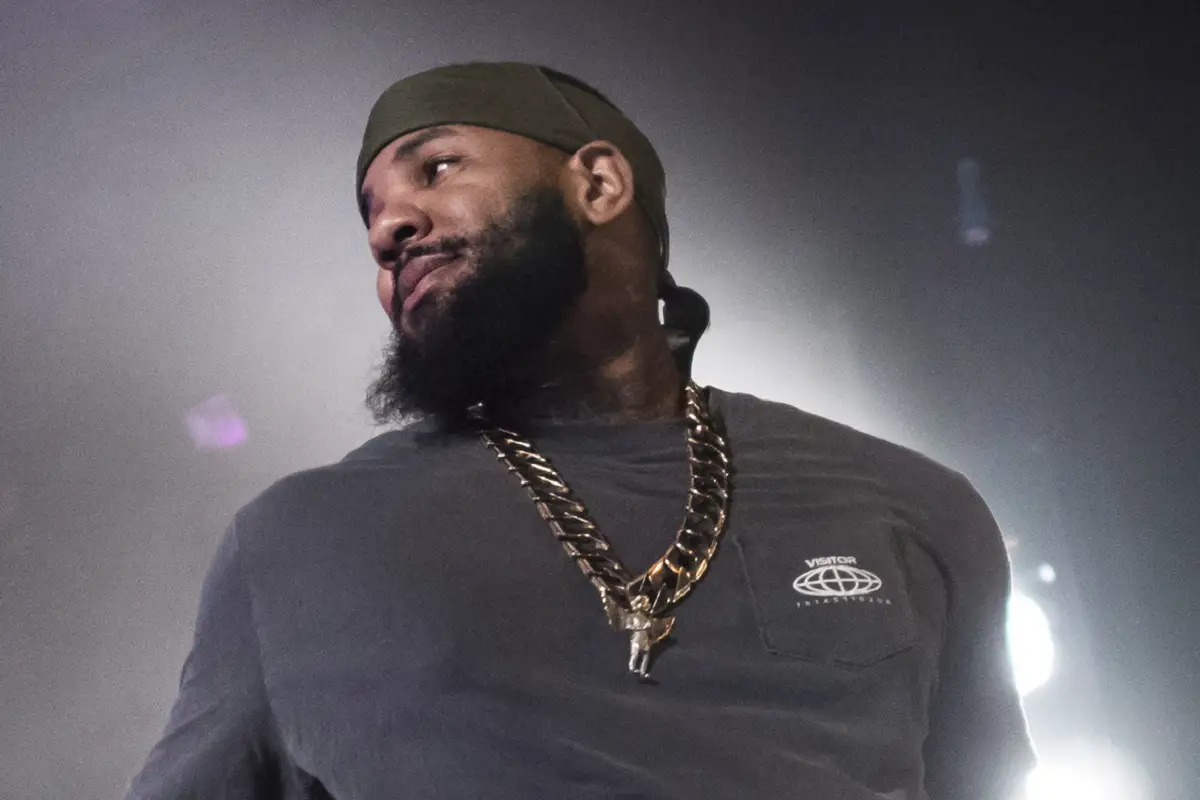
On January 18, 2005, The Game released The Documentary, an album that changed the commercial conversation surrounding West Coast hip-hop.
The Compton rapper arrived with the support of Dr. Dre, Aftermath Entertainment, G-Unit, and Interscope Records. He also had something that major-label resources alone could not manufacture: a recognizable perspective built around California rap history, autobiographical storytelling, and a determination to represent Compton.
The album debuted at No. 1 on the Billboard 200, selling approximately 587,000 copies in its first week.
For an emerging West Coast artist, those numbers were significant.
During the early 2000s, much of mainstream rap's attention had shifted toward New York and the rapidly expanding Southern hip-hop market. California continued producing important music, but a new Compton rapper had not commanded this level of national attention in years.
The Documentary changed that perception.
The Game helped bring West Coast hip-hop back into the mainstream by combining Compton's musical legacy with contemporary production, high-profile collaborations, and a debut album that competed with the biggest releases of its era.
He did not revive California rap single-handedly, and the region's independent scenes had never stopped developing. But his commercial breakthrough gave West Coast hip-hop another nationally visible figure at a pivotal moment.
The West Coast Was Still Active Before The Game's Breakthrough
By the early 2000s, the mainstream hip-hop landscape looked considerably different from the period dominated by The Chronic, Doggystyle, and Death Row Records.
New York remained a major commercial center through artists including Jay-Z, Nas, 50 Cent, and other established performers.
Southern hip-hop was growing rapidly through Atlanta, Houston, New Orleans, Memphis, and Miami.
Meanwhile, California was no longer represented in the national charts by one dominant new movement.
That did not mean West Coast hip-hop had disappeared.
Snoop Dogg remained commercially visible. E-40 and Too $hort continued recording. The Bay Area maintained an influential independent music economy, while underground Los Angeles artists developed sounds that differed from traditional gangsta rap.
The problem was one of national visibility rather than a complete absence of activity.
The Game entered that environment with a clear understanding of the region's earlier achievements.
He frequently referenced N.W.A, Tupac Shakur, Dr. Dre, Eazy-E, Ice Cube, Snoop Dogg, and other artists whose recordings had established California's place in hip-hop.
Those references became part of his public identity.
Rather than presenting himself as an artist disconnected from the past, he openly positioned his career within Compton's musical history.
Compton Was Central to His Identity
Born Jayceon Taylor, The Game grew up in Compton, a city already associated with some of hip-hop's most influential recordings.
That background created both opportunity and expectation.
Listeners familiar with N.W.A, Eazy-E, DJ Quik, and MC Eiht already understood Compton as a major rap location.
Any new artist representing the city would inevitably face comparisons with that history.
The Game embraced those connections.
His writing often combined neighborhood references, personal experiences, hip-hop history, and commentary about the music industry.
He approached rap as both a participant and a listener familiar with its earlier generations.
At times, his dense references to famous artists and records became one of his most recognizable stylistic habits.
The technique was not universally praised, and some listeners considered the repeated name-dropping excessive.
But it helped establish a distinctive framework for his songs.
Compton was not merely a city mentioned in his lyrics.
It was part of how he understood his position within hip-hop.
Dr. Dre and G-Unit Helped Create an Unusually Powerful Launch
The Game's major-label development involved two of the industry's most influential figures.
Dr. Dre signed him to Aftermath Entertainment, connecting the emerging rapper with a producer and executive whose work had helped establish the modern West Coast sound.
The project subsequently became associated with 50 Cent and G-Unit, whose commercial success created additional promotional opportunities.
That combination was exceptionally valuable.
Dre brought production expertise and an established history of developing major rap artists.
50 Cent brought access to one of the largest hip-hop audiences of the period.
Interscope provided the infrastructure needed to support a nationally distributed release.
However, The Documentary was not the product of a single producer or executive.
Its creation involved numerous contributors, including Mike Elizondo, Kanye West, Just Blaze, Timbaland, Cool & Dre, Scott Storch, Hi-Tek, and others.
A 2015 Complex oral history examined the album's recording process and the competing accounts surrounding its creation.
The retrospective is especially valuable because The Game's later conflict with 50 Cent led to disagreements about who deserved credit for certain songs and creative decisions.
The documentary record supports a broader conclusion: The Game's breakthrough depended on his performance and identity, but it was strengthened considerably by an unusually accomplished team.
The Documentary Restored Commercial Attention to Compton
The album arrived on January 18, 2005.
Its debut at No. 1 was immediately newsworthy.
According to contemporaneous Los Angeles Times reporting, The Documentary sold approximately 587,000 copies during its opening week.
The figure was particularly impressive for January, traditionally a slower period for high-profile releases.
But sales alone do not explain the album's significance.
The music combined elements of West Coast tradition with production approaches associated with several different hip-hop scenes.
The result was not a straightforward recreation of early-1990s G-funk.
It was a contemporary major-label rap album led by an artist whose regional identity remained central to the project.
That combination helped introduce The Game to listeners who might not have been closely following newer California rap.
Four songs explain much of the breakthrough.
“Westside Story” Established His Position
“Westside Story,” featuring 50 Cent, was an early statement of The Game's artistic identity.
Its dark production and confrontational delivery presented him as a rapper operating within Compton's street-rap tradition.
The record also linked his regional background with the larger G-Unit organization.
That pairing helped establish the project before its commercial peak.
The Game's vocal performance was direct and forceful, while his lyrical references emphasized West Coast identity and rap competition.
The record was not simply about announcing another new artist.
It signaled that an emerging Compton rapper had the support of a nationally dominant hip-hop organization.
“How We Do” Gave Him a Mainstream Hit
“How We Do,” featuring 50 Cent, became one of the records most responsible for introducing The Game to a national audience.
Produced by Dr. Dre and Mike Elizondo, the song used a restrained, recognizable instrumental with substantial space for the two performers.
Their contrasting deliveries helped drive the record.
50 Cent brought an established hitmaking style, while The Game supplied a more aggressive Compton-centered presence.
The recording demonstrated how the partnership could work commercially.
It also revealed that The Game did not need to perform over a production that reproduced the classic G-funk era exactly.
The song sounded current for 2005 while maintaining a recognizable California identity.
“Hate It or Love It” Added a Personal Narrative
“Hate It or Love It” became one of the defining records of The Game's career.
The song, produced by Cool & Dre, paired a soulful instrumental with autobiographical themes of struggle, ambition, and achievement.
The Game and 50 Cent delivered performances that emphasized personal history rather than relying only on confrontation or celebration.
Its accessibility was important.
Listeners could connect with the emotional narrative even without knowing every detail of the performers' backgrounds.
The record also captured the creative chemistry that existed before the partnership deteriorated.
Its continued recognition illustrates how successful the musical combination could be.
“Dreams” Demonstrated His Knowledge of Hip-Hop History
Produced by Kanye West, “Dreams” presented another side of The Game's writing.
The track uses personal ambitions, references to well-known artists, and memories of major cultural moments to place his career within a larger hip-hop narrative.
Kanye's soulful production created a different atmosphere from the album's more aggressive singles.
The Game responded with a performance that emphasized reflection and detailed references.
That approach became one of his defining strengths.
His best records often combine a specific personal experience with a larger conversation about hip-hop history.
The technique allows an individual song to connect different generations of listeners, although its effectiveness depends on whether the references contribute to a meaningful narrative.
The G-Unit Split Changed the Story
The success of The Documentary did not produce a lasting partnership between The Game and 50 Cent.
Their relationship fractured publicly in 2005, leading to an extended dispute involving interviews, diss records, and rival camps.
The Game's G-Unot campaign became one of the most recognizable elements of that conflict.
The dispute generated substantial publicity, but it also complicated his career.
His biggest early singles featured 50 Cent.
His debut had benefited from the visibility and resources surrounding G-Unit.
Once those relationships deteriorated, The Game faced a difficult question: could he remain commercially successful without the organization that had helped introduce him?
The conflict also became inseparable from his public image.
Records such as “300 Bars N Runnin'” showed his willingness to engage in extended competitive rap.
But the continuing disputes could overshadow his music and divert attention from individual releases.
That contradiction became part of his legacy.
Battle records established him as a competitive performer, while controversy sometimes made his career appear more defined by rivalries than by the music itself.
Doctor's Advocate Proved the Debut Was Not His Only Commercial Success
The most important test arrived with Doctor's Advocate in November 2006.
The album was released without new production from Dr. Dre and outside The Game's previous G-Unit affiliation.
Its title reflected his complicated relationship with Dre, whose support had been important to his initial breakthrough.
The album included “It's Okay (One Blood),” featuring Junior Reid, along with “Let's Ride” and “Wouldn't Get Far.”
The music continued drawing from California's traditions while incorporating production from a wider range of collaborators.
Commercially, the project performed strongly.
It debuted at No. 1 on the Billboard 200, selling approximately 358,000 copies in its first week, according to contemporary Los Angeles Times reporting.
That was lower than The Documentary's opening figure, but still a major result.
More importantly, it demonstrated that The Game had developed an audience willing to follow him beyond the original Aftermath and G-Unit launch.
He could no longer depend on the same institutional relationships, but he remained a nationally visible rapper.
His Later Albums Extended the Story Beyond 2005
The Game continued releasing major projects after Doctor's Advocate.
LAX, released in 2008, included “My Life,” featuring Lil Wayne, and further established his ability to work with performers from different regions.
The R.E.D. Album reached No. 1 on the Billboard 200 in 2011.
Jesus Piece followed in 2012, exploring faith, identity, and contradictions through a large cast of collaborators.
In 2015, The Game revisited his breakthrough with The Documentary 2 and The Documentary 2.5.
Those projects connected the original album's legacy with another generation of production and featured artists.
The 2016 album 1992 returned to personal experiences and the social environment surrounding his youth.
Born 2 Rap arrived in 2019, followed by DRILLMATIC Heart vs. Mind in 2022.
The catalog reflects different phases of his career, although the projects did not receive identical commercial or critical responses.
Their importance is not that every release matched his debut.
It is that The Game remained active across major changes in recording technology, distribution, and hip-hop audiences.
The Documentary III Revisited His Legacy in 2026
On August 21, 2026, The Game released The Documentary III, extending the album series that began with his 2005 breakthrough.
The 24-track project connected different generations of California rap while revisiting the musical identity associated with the original.
Its guests included established names such as Snoop Dogg, Kanye West, Lil Wayne, and Drake, alongside newer West Coast performers.
“The Part” brought together AZ Chike, Lefty Gunplay, and YG, directly connecting The Game with artists representing more recent Southern California rap movements.
Other recordings incorporated G-funk references, reflective storytelling, and production approaches drawn from contemporary hip-hop.
The album also demonstrated the challenge of building a career around a landmark debut.
Returning to The Documentary name provides immediate recognition, but it also creates comparisons with a project that arrived under very different industry circumstances.
The 2026 release did not reproduce the original album's commercial breakthrough.
Instead, it demonstrated The Game's continued effort to connect his established identity with newer sounds and performers.
That distinction matters to an assessment of his longevity.
His influence extends beyond one release, but the exceptional commercial conditions surrounding The Documentary remain difficult to repeat.
What The Game Actually Changed for West Coast Hip-Hop
The Game's influence is sometimes described as saving West Coast rap.
That statement overreaches.
California music did not stop developing between Death Row's peak and The Documentary.
The Bay Area maintained a substantial independent scene, and established performers continued releasing music.
Artists outside the commercial mainstream also contributed important work during those years.
The Game's achievement was more specific.
He brought an emerging Compton rapper back to the center of national album sales and radio attention in 2005.
He used regional history as a central part of his artistic identity.
He showed that a new West Coast artist could work with nationally influential producers without eliminating California references from the music.
And, through Doctor's Advocate, he demonstrated that his recording career could continue after the original partnerships fell apart.
The Game also occupied an unusual generational position.
He arrived close enough to the Death Row era to collaborate with artists and producers directly connected to its legacy.
He remained active long enough to work with performers who developed during the TDE, blog, and streaming eras.
His music therefore connects several phases of West Coast hip-hop history.
But that influence should not obscure the role of Dr. Dre, 50 Cent, the producers, featured performers, and label executives who helped develop his earliest releases.
The Documentary succeeded because several important creative and commercial forces came together at the right moment.
The Game supplied the identity that held them together.
How The Game Helped Bring the West Coast Back Into Focus
The Game's breakthrough was one of the defining West Coast rap stories of the mid-2000s.
The Documentary provided major singles, compelling performances, national commercial success, and an unmistakable connection to Compton.
His relationship with Dr. Dre and G-Unit supplied powerful infrastructure, but his personal storytelling and historical references helped distinguish him from other emerging rappers.
The G-Unit conflict complicated his rise, while Doctor's Advocate demonstrated that he could succeed after the partnership ended.
His subsequent catalog, including The Documentary III, reflects a career extending across more than two decades.
The Game did not create the West Coast's renewed momentum alone.
Other artists, producers, labels, and regional scenes were already contributing to California hip-hop's evolution.
But in January 2005, The Game made Compton a major subject of the national rap conversation again—and delivered the kind of commercial breakthrough that reminded the industry of the West Coast's continuing influence.
That is the strongest historical case for his place among the artists who helped carry California rap into the 21st century.